Mastering the nail apex building process with Semilac Gel UV Hybrid
Master the nail apex building process with Semilac. Learn to identify stress points and place the perfect gel bead for a durable, structured set!
The nail apex is the highest point of curvature along the nail – and building it correctly is what separates a structured, durable gel set from one that lifts, snaps, or loses its shape. With Semilac Gel UV Hybrid, you have the self-leveling properties and viscosity to place a precise bead, but placement and technique still determine the result. This guide covers everything from identifying the stress point to correcting the most common apex mistakes nail technicians make!
Here is what this guide covers:
- why the nail apex matters for nail strength and long-term curvature stability
- how to build the apex step by step – bead placement, gravity check, and post-cure filing
- which mistakes to watch for and how to correct them before they become structural problems
Why does the nail apex matter for nail structure?
A properly positioned apex distributes mechanical stress across the entire nail rather than concentrating it at one weak point. The stress point sits roughly one-third of the way down from the cuticle – this is where sideways pressure, flexion, and impact converge. When the apex sits directly above that zone, the nail acts like an arch: load is transferred outward toward the lateral walls and free edge instead of bending downward at the thinnest point.
Gel Nails that lack a defined apex or carry it in the wrong position tend to snap at the stress point under ordinary use – opening a can, typing, anything that applies downward leverage. On longer nail shapes like stiletto or almond, this matters even more because the free edge amplifies leverage forces considerably. A high, symmetrical apex is not an aesthetic preference for these lengths – it is a structural requirement.
How to build the nail apex correctly
Identify the stress point before you pick up product. With the hand relaxed, look at the nail from the side – the natural curve tells you where the apex should peak. On most clients this lands between the first and second knuckle crease. Mark the zone visually before applying gel.
When working with Semilac Hybrid Polish, place your bead directly onto the stress point zone. One slightly larger bead at the stress point, then a thinner bead toward the free edge lets the gel flow from center outward during leveling. Semilac Gel UV Hybrid self-levels well, so do not over-manipulate: tip the finger down and let gravity settle the product for 5 to 8 seconds before adjusting.
The gravity check before cure
Before curing, perform the gravity check. Point the finger straight down – if the bead remains as a dome over the stress point, the placement is correct. Adjust if it runs toward the cuticle or pools at the free edge. After cure, file the apex ridge with 180 grit: file parallel to the lateral walls, not across the apex ridge – crossing the ridge flattens what you built.
Choosing the right product for sculpted structure
Not all Hybrid Polish shades behave identically under sculpting conditions. For apex building on longer nails, sheer and jelly formulations offer one specific advantage – translucency makes the dome and light refraction visible as you work, so you can read the structure before you cure. Our collection includes several shades that work well for this purpose:
The shades that work best for showing apex definition:
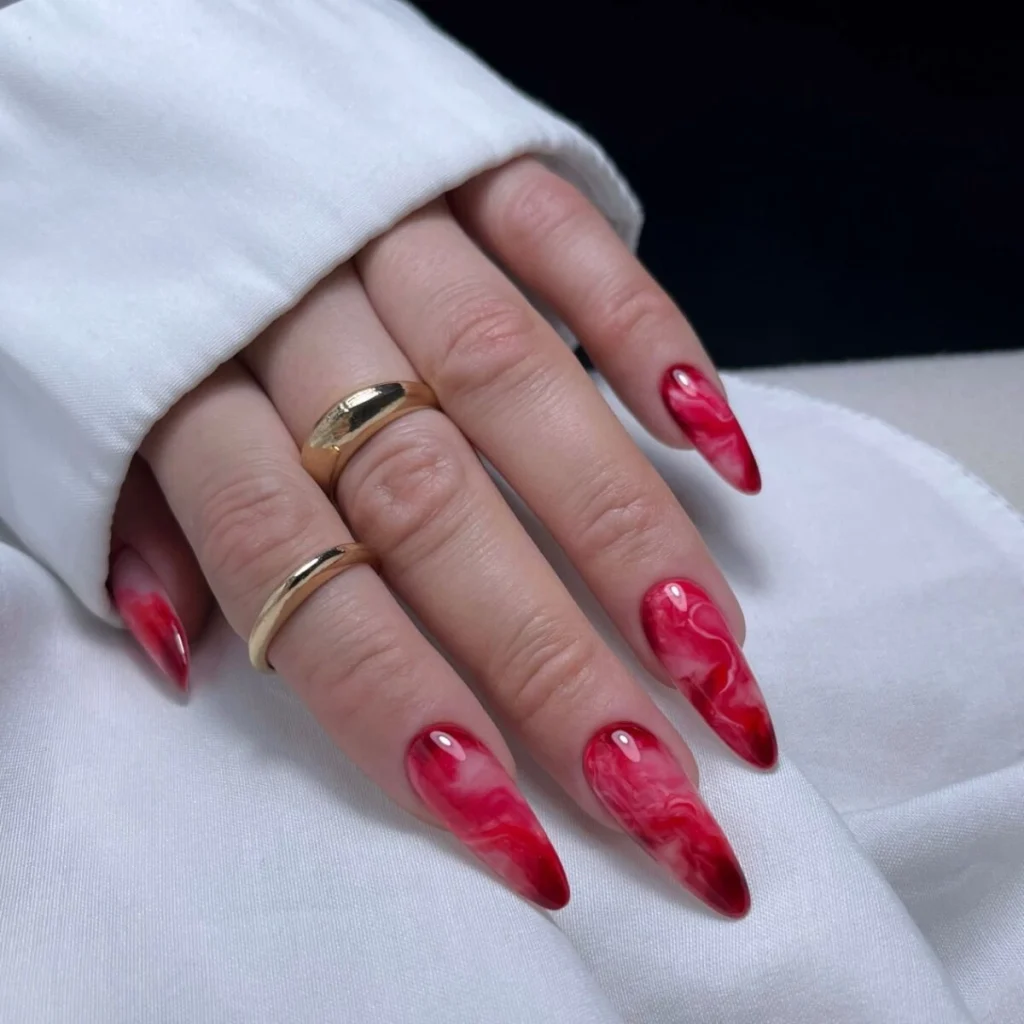
- Jelly Cherry 592 – warm red with jelly translucency, light refraction reveals dome shape clearly during application
- Jelly Raspberry 796 – deeper berry tone with the same jelly body, shows apex ridge and lateral curvature through the color
- Rebel Rose 793 – rose with moderate opacity, sits well over a structured base coat apex
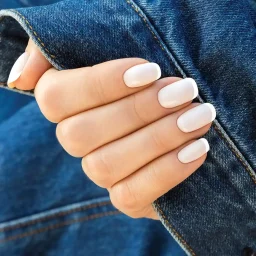
- Strong White 001 – high contrast against skin exposes asymmetry and uneven curvature instantly, useful for practice sets
Common apex mistakes and how to fix them
The most frequent error is placing the apex too low – closer to the center of the nail or toward the free edge. This leaves the stress point thin and unprotected. The fix before curing: add a small bead to the stress point and reshape. After cure, a too-low apex needs buildup with a second layer rather than filing down.
An apex that is too high creates its own problems: the nail feels bulky, clients notice discomfort, the silhouette looks unnatural. Two controlled applications with full cure between them produce a more even dome than one oversized bead. File excess with 180 grit after the second cure, in smooth arcs along the curvature.
Correcting asymmetric apex placement
Asymmetric apexes – where the ridge runs off-center – are caused by brush pressure during placement. Check from straight above the nail after placing the bead. The highest point should align with the center of the nail width. In our experience, technicians who check from two angles catch asymmetry before it sets. For more, see our side wall symmetry guide.