Nail Infill Guide: Rebalancing Your Semilac Gel UV Hybrid Set
Master the nail infill and rebalance technique. Learn when to fill or remove your Semilac set to save time and protect the natural nail. Avoid common errors!
After two to three weeks of wear, a Semilac Gel UV Hybrid set deserves more than full removal – a proper rebalance or infill restores shape and fills the growth zone. Knowing when to rebalance versus redo from scratch saves time and protects the natural nail. This guide walks through the decision, the technique, and the most common infill errors!
Here is what this guide covers:
- when to rebalance versus when a full soak-off is the right call
- how to file the growth zone and blend old gel without damaging the nail plate
- which mistakes cause lifting, uneven color, and weak stress points
When is it time to rebalance vs redo?
The answer comes down to three things: product integrity, nail length, and the condition of the apex. If the existing Gel UV Hybrid layer is still bonded well, the free edge has not grown past 8-10 mm, and the apex sits roughly where it should, a rebalance is the right move. You are working with what is there – blending new product into the growth zone rather than stripping everything off and starting over.
A full redo makes sense when lifting covers more than 30% of the nail, when the shape has migrated toward the free edge, or when the client wants a significant length change. Trying to infill over compromised adhesion traps moisture and invites bacteria under the product. When in doubt, soak off cleanly rather than layer over a problem.
How to rebalance nail infill the growth zone
Start by assessing each nail individually before picking up a file. The growth zone – the area between the cuticle and where the existing product begins – will show the natural nail plate at its thinnest and most vulnerable. Any aggressive filing here thins the plate and causes sensitivity for the client on the next appointment.
A 180 grit file is the right tool for the growth zone – anything coarser removes structure faster than you intend and risks over-thinning before you have even applied new product. Work in one direction from the cuticle area toward the middle of the nail, feathering the edge of the old gel to create a smooth transition. The goal is a seamless slope, not a visible ledge.
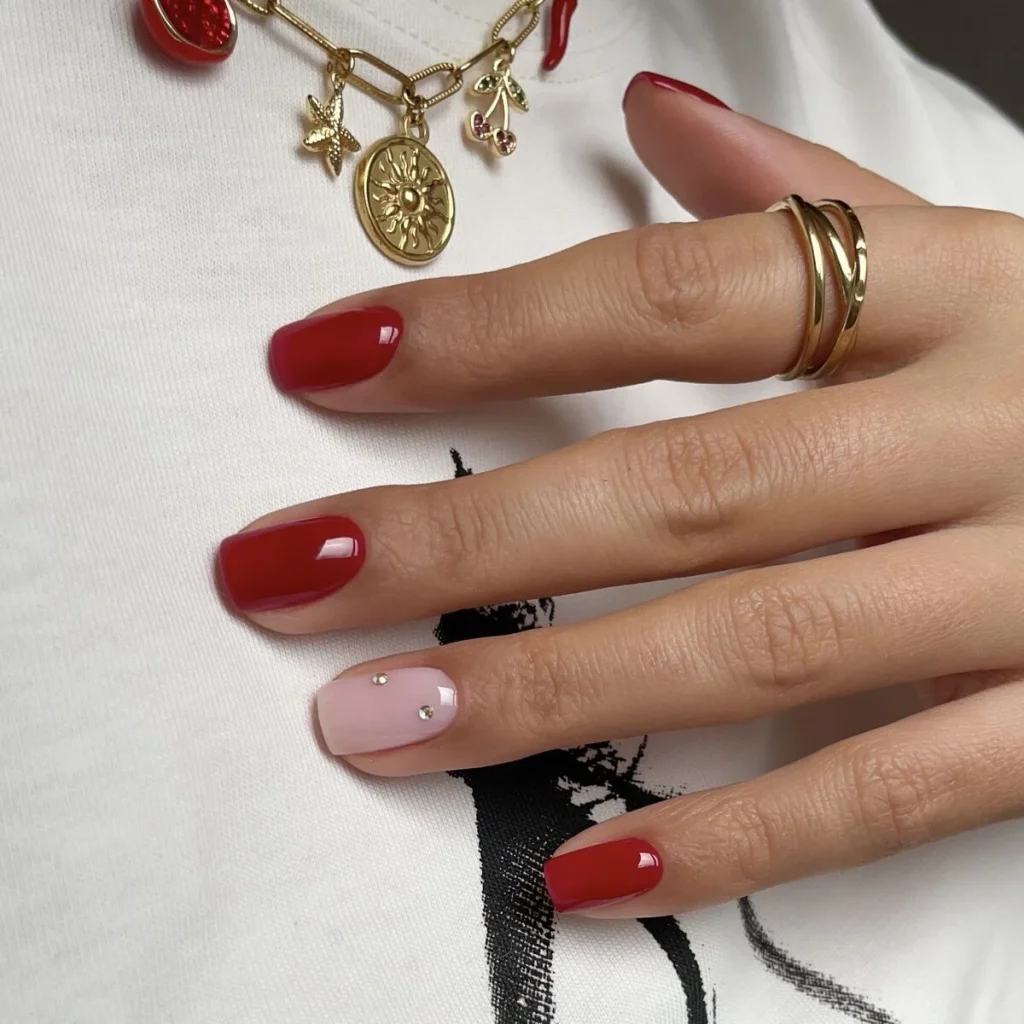
The products used in the set shown here:
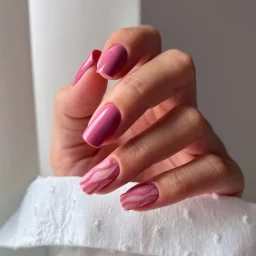
- Radiant Raspberry 928 – a deep glossy red that shows any unevenness in blending immediately, making it a useful color for checking your technique
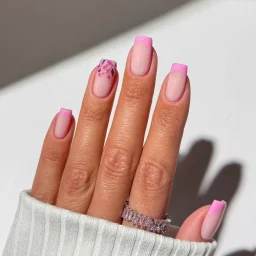
- Delicate French 002 – the milky pink base used on accent nails, where translucency highlights the growth line if blending is not thorough
- Sheer and nude shades across the Semilac Gel Nail Polish range – lighter finishes are less forgiving of visible blend lines, so they are a good training ground for refining infill technique
Once the growth zone is filed and feathered, apply a thin layer of Hybrid Polish to the new area and cure fully before building the apex. Rebuild the stress point with a slightly thicker pass – this is where the nail flexes under pressure, and skimping on product here leads to breaks before the client’s next appointment. Cure each layer for the full recommended time, adding 10 seconds if working under a lower-wattage lamp.
Correcting the apex and shape during rebalance
A rebalance is also the right moment to correct shape drift. Over multiple fills, the apex migrates toward the free edge as product builds at the tip. Use a fine-grit buffer (220 or higher) to reshape the highest point back toward the center, then rebuild with fresh gel. Check the lateral walls for straightness before applying top coat. For more detail, check out our side wall symmetry guide.
Common nail infill mistakes and how to fix them
The most frequent error in Gel Nail Infill work is filing the growth zone too aggressively in an attempt to make the transition invisible quickly. Coarse filing generates heat and leaves micro-scratches on the natural nail, both of which weaken adhesion for the new product. Slow down, use finer grits, and let technique replace pressure.
A second common mistake is skipping surface prep on the growth zone. Natural nail that has grown out is covered in oils and residue – without a quick cleanse and light buff, the new gel bonds to a barrier rather than the plate. In our experience, a 60-second prep step prevents most premature lifting complaints.
Application thickness errors
Applying too thick a first layer is the third mistake. Thick product traps heat during curing, causing a hot spike and sometimes shrinkage at the cuticle edge. Two thin passes with full cure between them will always outperform one heavy coat. Our gel formulas are engineered to self-level at thin application depths, which works in favor of this approach.
Matching nail infill frequency to each client’s nail growth
Match the infill cadence to the client’s growth rate – typically every 3 to 4 weeks for natural nail work. For a deeper look at the full set workflow, our pro hybrid techniques guide covers base application, curing sequences, and maintenance intervals.