Combining matte and gloss nails textures with Semilac Hybrid Polish
Master matte and gloss nails with Semilac. Learn to create a 3D jewelry effect through texture contrast and discover techniques for a sharp finish.
Matte and gloss nails texture contrast is one of the most underused tools in professional nail design. A matte base against a glossy shimmer accent creates a 3D jewelry effect that color contrast alone can never achieve. This guide walks through how to build that look using Semilac Hybrid Polish, which finishes to deliver it – and how to apply the technique so it stays sharp across the whole wear cycle. Let’s get technical!
Here is what this guide covers:
- how surface contrast works between matte and gloss nails finishes in gel manicure
- which products create the jewelry-inspired swirl effect shown in this look
- when and for whom this style works best, and how to adapt it for different clients
The jewelry-inspired look: what makes it work
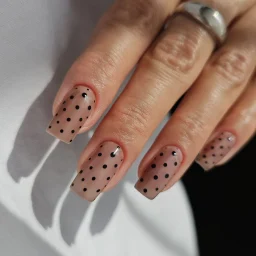
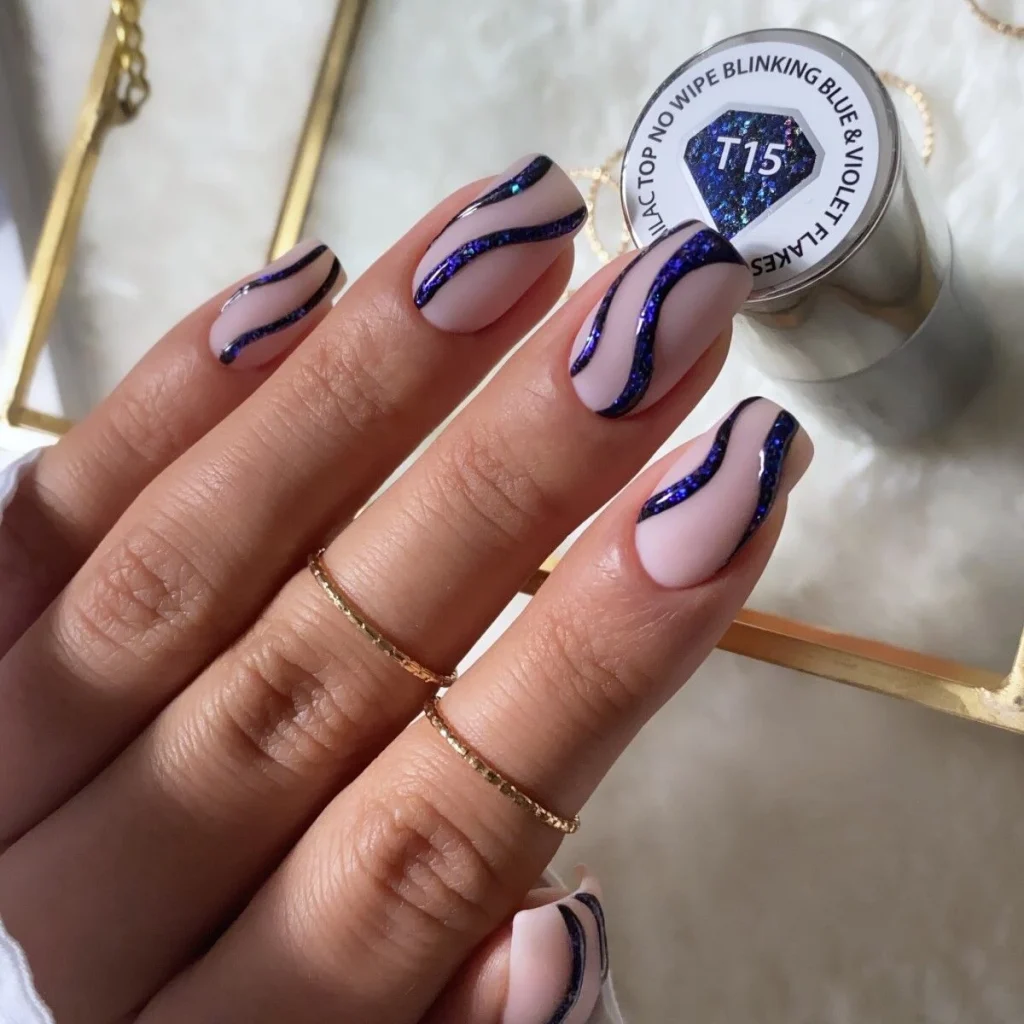
This stylization is built on short square nails with a milky nude base and a swirl pattern of blue-violet shimmer running across the nail plate. The contrast is not about color – it is about surface. The matte milk base reads as skin, calm and neutral, while the shimmer swirls catch the light and read as jewelry. That layering gives the look its depth without glitter overload.
The base here is French Beige Milk 051, a milky beige nude with a subtly warm tone that sits close to skin on fair to medium complexions. Applied in two thin coats and fully cured, it gives a smooth, neutral foundation for the accent layer.
The matte and gloss nails shimmer accent layer
The accent is Top No Wipe Blinking Blue Violet Flakes T15, applied not as a full top coat but as a swirl – a wave pattern drawn with a liner brush across the nail surface. The blue-violet flakes catch light from multiple angles, creating the sparkle that reads as the “gemstone” in the jewelry effect.
How does matte and gloss nails contrast actually work in gel manicure?
Matte Gel Nails absorb light rather than reflecting it – the surface scatters incoming light in all directions, which flattens the visual texture. Gloss does the opposite: a smooth, even surface reflects light in a single plane, which makes it appear to sit above the matte. That optical height difference is what creates the 3D appearance. You are not actually building dimension – you are creating the perception of it through finish contrast.
For this reason, the matte layer must be completely cured and smooth before the glossy accent goes on. Any texture or uneven cure in the base will interfere with how cleanly the swirl sits on top. If you are using a UV Hybrid system, cure the base coat fully, apply your color coats and cure again before adding the shimmer accent. This is not the place to rush a cure cycle.
Drawing the swirl cleanly
In our experience, the swirl pattern works best when drawn in one continuous motion per nail – stopping mid-swirl creates a visible break in the flake pattern. Keep your liner brush loaded but not overfull, and work from the cuticle area toward the free edge in a single wave.
Who is this look for, and when does it land best?
This style works well across a wide client range because the base is neutral and the accent reads as elegant rather than bold. Clients who want something beyond a plain nude but are not ready for heavy nail art find the swirl accent approachable. Evening events, engagement photos, and bridal prep appointments are natural fits. The blue-violet shimmer also photographs well under warm indoor lighting, which matters for clients who want strong social content from their appointment.
Gel Nail Polish finishes in this milky-base-plus-shimmer-accent format reward practice – the swirl technique is learnable in a short session and looks more complex than the time it takes. The same approach works across Semilac Hybrid Polish collections – any shade with a milky base pairs well with a shimmer accent in a contrasting tone.
Adapting the texture matte and gloss nails contrast principle to other looks
Matte-versus-gloss contrast is not limited to swirl patterns. The same surface tension principle applies to color-blocking, geometric accents, and even simple French variations where one element is matte and the other is gloss. Any time one section of the nail reads matte and another reads glossy, the glossy element advances visually – this is a reliable rule in nail design that works regardless of the color palette.
If you want to go deeper on mixing finishes and product systems, our guide on mixing different nail systems in one manicure covers compatibility, cure layering, and which combinations hold up under daily wear. For more texture and color combinations in seasonal looks, browse our creative pastel and neon guide for inspiration on how surface contrast reads across different color families.